
Natural pain relief is something practitioners can offer alongside pain medication, not instead of it. This article shares the herbs, foods, and approach I use to support clients with nerve pain, muscle spasms, and chronic pain, including what to do when a client is already taking painkillers.
Key takeaways
- Natural pain relief works best alongside medication, not as a replacement, especially when pain has been severe or long-term.
- Severe, unrelieved pain keeps adrenaline production high, and adrenaline feeds the viruses that are often behind the pain, so short-term pain relief can help break that cycle.
- Nerve and muscle pain often responds to herbs and supplements like magnesium glycinate, curcumin, lemon balm, nettle leaf, MSM, ALA, and California poppy.
- Food plays a direct role in pain relief, from turmeric and ginger juice shots to celery juice, wild blueberries, and the pathogen-feeding foods, eggs, dairy, and gluten, that are best removed.
- According to Medical Medium® Information, the liver stores pharmaceuticals it cannot immediately process, and it can take up to two years of consistent liver support to clear old medication from its deepest layers.
- Any decision to change or reduce pain medication belongs to the client and their doctor, not the practitioner.
- With consistent food and supplement support, some clients have been able to reduce or stop needing pain medication as their underlying condition improved.
My Own Experience With Pain Medication
When I was bitten by a poisonous spider in 2017, the pain in my arm became so severe that I eventually lost the use of my hand. I couldn’t even hold a pen – it would slip out of my fingers every time I tried.
At that point, I hadn’t taken a painkiller in eleven years. And yet it was Anthony William himself who told me to take ibuprofen as needed, alongside everything I was doing to protect my adrenals and recover.
There was a reason for that advice. When severe pain goes on without relief, the body keeps producing adrenaline, and adrenaline feeds the very viruses that are often behind the pain in the first place. A person can get trapped in a cycle their body cannot break on its own. In a situation like mine, taking ibuprofen can help interrupt that cycle and give the body a chance to begin healing.
I remember this whenever I work with someone who is in severe pain.
There are times when a person needs pain relief. When someone has been living with relentless pain, sometimes for months or even years, the last thing they need is to feel judged for taking medication that helps them get through the day.
As practitioners, our role is not to tell someone to stop taking pain medication. We can meet them where they are and bring in natural remedies alongside it. Those natural pain relief remedies carried me through my own recovery, and they have helped many of my clients since.
When Pain Becomes Part of Chronic Illness
 Pin
Pin If you work with people who have chronic illness, you will eventually work with someone who is living with pain.
For some people, it is nerve pain. For others, it is muscle spasms, migraines, joint pain, or pain that moves around the body and never seems to have a clear explanation. Some have lived with it every day for years. Often, the only option they have been given is another prescription or a stronger one.
Many people are also afraid of what taking pain medication long-term may do to their body. They may be worried about opioids, or they may have watched someone they love struggle with them. So they start looking for other ways to manage their pain.
This is where we have to look at the bigger picture.
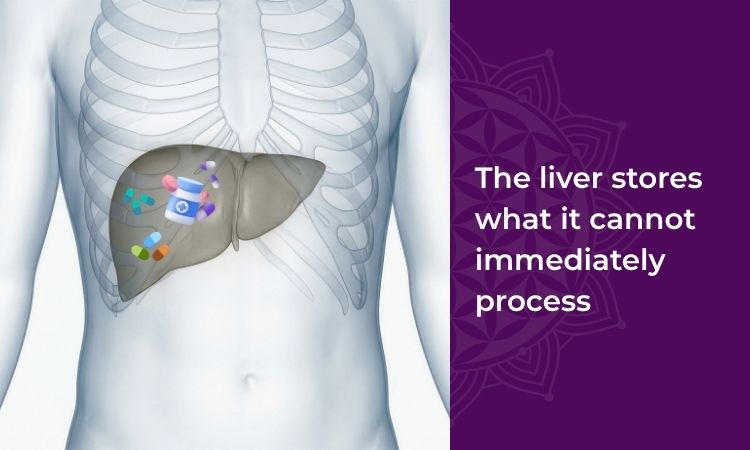
According to Medical Medium® Information, the liver stores what it cannot immediately process, including pharmaceuticals. Different types of pharmaceuticals can settle at different depths of the liver, with anti-inflammatories and opioids reaching its deepest layer. It can take up to two years of consistent liver support to fully cleanse old pharmaceuticals from the liver.
This does not mean that someone should feel bad about having needed medication. What we can do is care for the body while also looking at what may be causing the pain, which is where pain relief for chronic illness starts.
What Is Actually Causing the Pain
Before reaching for any tool, I want to understand the kind of pain someone is experiencing. When a client describes stabbing, burning, wandering, or spasming pain that conventional testing has not been able to explain, I also consider what may be happening with the nerves. Viral neurotoxins can inflame sensitive nerves and cause them to go into spasm.
When the pain is viral, the deeper work is the same work we already do for chronic illness: removing the foods that feed pathogens, lowering fats, supporting the liver, and steadying the adrenals. What I share below can bring relief while that work happens, but it does not replace it.
You can provide pain relief herbs and supplements but without addressing the root cause of the pain (it’s usually viral outside of any injury), then you will never resolve the issue at its root.
The Natural Pain Relief Tools I Reach For
 Pin
Pin When I am supporting someone with nerve or muscle pain, there are a handful of tools I come back to again and again: curcumin, lemon balm, nettle leaf, magnesium glycinate, MSM, ALA, and California poppy.
Calming Muscle Spasms and Inflammation
Magnesium glycinate is one I use often when muscles are spasming, to calm both the muscles and the nervous system. It can be soothing and taken in the evening as well.
If inflammation is contributing to the pain, I also think about curcumin. One of my clients recently told me it has saved her many times. Depending on what a client is dealing with, I may also adjust how often they take it rather than keeping the amount fixed.
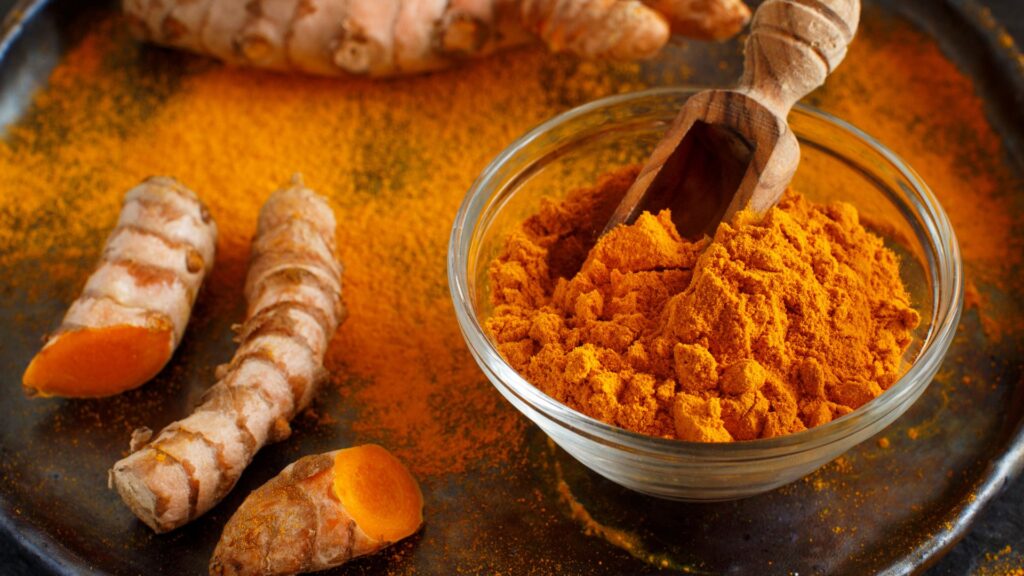
“Turmeric is great for anything in the body that’s inflamed and causing pain, from nerves to joints to the brain.”Anthony William, medicalmedium.com
Calming Irritated Nerves
Lemon balm and nettle leaf are two of my favorites for calming irritated nerves. Lemon balm settles a sensitized nervous system, and a strong cup of the tea in the evening can help someone whose pain has been keeping them awake. Nettle leaf brings down the aches and the inflammation that ride along with nerve pain.
MSM and ALA are two more nerve pain natural remedies I use when the nerves themselves need support, particularly with ongoing nerve pain.
California poppy can be very helpful for acute nerve and muscle pain, and it has calming properties that matter when pain has kept the nervous system on high alert. You can find it as a tea, a tincture, or capsules.
“It contains analgesic and antispasmodic properties which is useful in providing relief from acute nerve and muscle related pain.”Anthony William, medicalmedium.com
When Nerve Pain Comes From Shingles
So often nerve pain is coming from shingles, and this is where propolis becomes one of my favorites. It is strongly anti-inflammatory, and it is one of the most powerful tools there is against shingles, so it works on the pain and on the virus driving it at the same time. It is wonderful for pain in the mouth and jaw as well, and I often pair it with California poppy when someone is in a painful flare.
When someone is in a hard stretch, one approach I use is to alternate. A few days of California poppy and lemon balm in higher amounts, like shock therapies, to bring the pain down, then a couple of days of propolis and goldenseal to go after the shingles or strep underneath it. This is what I mean by a shock therapy approach: stronger amounts for a short window, then easing back. Goldenseal on its own is not a pain remedy, but as the infection or pathogen feeding the pain comes down, the pain has a chance to settle.
California poppy along with MSM can stop nerve pain spasms (different than Magnesium Glycinate that helps muscle spasms). As I have mentioned before, California poppy, MSM or any other pain supports will not be as effective without an underlying antiviral protocol with foods and supplements to accompany them.
Quick Relief in the Moment
And sometimes the simplest things make a difference too. I recommend cold packs for headaches and migraines when someone needs relief in the moment.
For shifting or moving pain, spasms, and twitches, there is also the Nerve Shifter, a fresh juice shot from Brain Shot Therapy made with leafy greens and herbs. It was created for these kinds of neurological symptoms and can be a helpful one to know about when someone is in the middle of a flare and needs support in the moment.
These are tools we can bring in to help someone become more comfortable while the deeper healing continues.
Foods That Can Help
Food has a place here too, and for many clients it is the most accessible place to start with natural remedies for chronic pain.
Foods to Bring In
 Pin
Pin Fresh turmeric and ginger can be juiced together into a small, concentrated shot and taken in tiny sips throughout the day. Turmeric works on the inflammation, and ginger helps calm the spasms that come with irritated nerves. You can also simply have ginger in water or as a tea.
Celery juice is another tool I come back to often. It helps starve the pathogens that can be behind chronic pain while providing the mineral salts the nervous system needs.
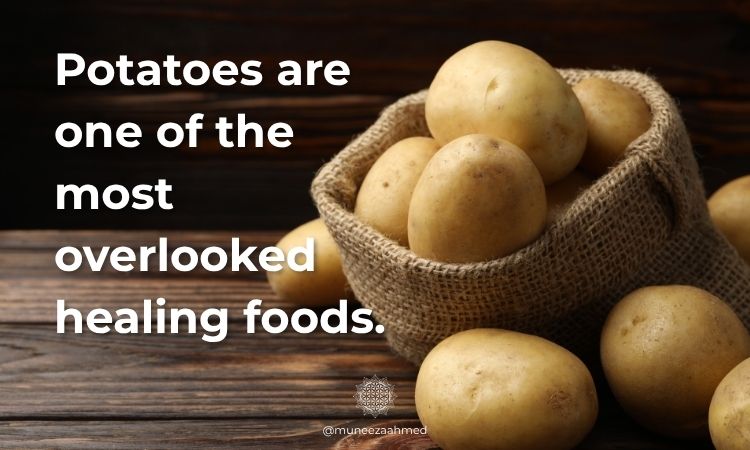
Potatoes are one of the most overlooked healing foods. They provide steady glucose and are especially supportive for the nervous system. When someone is hurting and exhausted, they can also be a simple and satisfying food to eat.
Wild blueberries are deeply anti-pathogenic. Papaya can help with swelling and inflammation in the digestive tract, while fresh aloe gel is cooling and can be helpful for inflammation and arthritis pain.
Leafy greens bring in antiviral compounds and valuable minerals, while cucumbers are deeply hydrating and cooling.
Garlic and onions belong here as well, because they go after the pathogens themselves. Garlic is strongly antiviral and antibacterial, and onions carry sulfur compounds that strengthen the nervous system along with antibacterial properties of their own. For someone dealing with a viral load, these are two foods I like to bring in regularly.
And when someone is too worn out to cook or even to eat much, a simple healing broth of onions, garlic, ginger, carrots, celery, mushrooms, and potatoes brings many of these foods together in one warm bowl. It is soothing, easy to digest, and an easy option when someone does not have much energy to prepare food.
Foods to Take Out
It is just as important to look at what we are taking out. Eggs, dairy, and gluten feed the pathogens that can contribute to chronic symptoms, so these are among the first foods I ask clients to remove.
Supporting Clients Who Are Already on Pain Medication
Some of your clients will come to you already taking painkillers, and some may need them for a while.
There can be a lot of fear or shame around needing medication, and I never want to add to that. I wrote more about this in my article on holding space for chronic illness clients. I know from my own experience that there are times when relief is simply needed.
We can still do so much for the body during that time when supporting clients with chronic pain. We can bring in liver-friendly foods, use the remedies above where appropriate, remove foods that feed pathogens, and take care of the adrenals. Any decisions about changing or reducing medication should remain between the client and their doctor.
What Is Possible
One woman in my Intuitive Healing Community was caring for her mother, who is in her eighties. Her mother had been in extreme pain day and night for two months, even while taking painkillers.
They continued adjusting her foods and supplements based on what she needed. When her daughter checked in with me again, her mother was sleeping through the night, her appetite was coming back, and the pain was almost gone. She was no longer taking painkillers because she no longer needed them.
Every person and every healing journey is different, and I never promise that someone else will have the same experience. But I have seen what can happen when we keep paying attention to the body and adjust what we are doing along the way.
As practitioners, there is so much we can do for someone struggling with chronic pain. We can care for the liver, address pathogens, nourish the nervous system, and make the healing process more manageable alongside whatever medical care they need. This is what natural pain relief looks like in practice.
If you want to learn more about working with clients in complex situations like these, this is the kind of work I teach inside Rise Up.
If this article was helpful, share it with a fellow practitioner or tag me on Facebook or Instagram. I always love hearing from you and learning how you are bringing this information into your own practice.
To your peace and happiness,
Muneeza
P.S. The next time I open the doors to Rise Up, my newsletter community hears about it first. You can join here.
Disclaimer:
This post contains affiliate links. I may earn a small commission if you purchase through my link, at no extra cost to you.