
The most common pregnancy myths, including eating for two, avoiding all exercise, and skipping sex, are not grounded in the lived experience of women or midwives. This post breaks down five major pregnancy myths, where they come from, and what the truth actually is.
Key takeaways
-
- The most persistent pregnancy myths spread not through women’s experience but through expert guidance shaped by commercial and institutional interests.
- “Eating for two” is a pregnancy myth that encourages women to form unhealthy eating habits during a time when balanced nutrition matters most.
- There is no safe amount of alcohol or caffeine during pregnancy. Both affect the adrenal glands and liver in ways that matter for birth and recovery.
- Sex during normal, low-risk pregnancy does not harm the baby. The uterus is well-protected and the body has multiple layers of defense.
- Exercise during pregnancy, including yoga, walking, swimming, and light rebounding, supports the health of both mother and baby.
- Routine medical testing during pregnancy carries real risks that are often downplayed. Working with a trusted midwife helps parents make informed decisions.
- Your body’s signals, your intuition, and the wisdom of experienced women are reliable guides through pregnancy. You are not required to defer to institutional authority.
How do pregnancy myths start? Where do they come from?
I’ll tell you where they don’t come from — women who have been through pregnancy.
Pregnancy myths have become so commonplace we don’t even question some of them anymore. It feels to me like women have become secondary in their own experience of pregnancy. The “experts” set the tone for what to expect when we’re expecting, instead of women and midwives who have lived it themselves.
That is how pregnancy myths get started. Experts often have conflicts of interest, including their desire to make a name for themselves. Every aspect of life during pregnancy — supplements, nutrition, exercise, medical testing, even sex — is now dictated mainly by people who have never been pregnant.
What happened to common sense based on wisdom passed down through generations? That is where you rarely find pregnancy myths. Which makes me wonder why we trust the experts so much.
Let’s look at five of the most common pregnancy myths and why they’re false.
Myth 1: “You’re eating for two” — and why pregnancy nutrition doesn’t work that way
This pregnancy myth gets me upset. It feels very manipulative and just icky, and I’ll tell you why.
During pregnancy, a woman’s body is going through natural changes. These changes may affect her appetite, libido, energy levels, and immune system. Women often must establish new trust with their bodies as they navigate these changes.
When someone tells a woman, “You’re eating for two! Don’t overthink what you’re eating or how much!” — it encourages women to enter into a fraught relationship with food that almost inevitably follows them into postpartum.
A woman who is pregnant for the first time gives in to a craving for high-fat ice cream because she’s “eating for two.” She may then form a habit of eating it whenever she feels like it. After all, she’s pregnant. She should just listen to her body, right?
But is her body really signaling that it needs this high-fat, heavily sweetened food made from the breast milk of another species?

Pregnancy is not a free license to eat junk food or to overeat. The female body is perfectly capable of signaling hunger during pregnancy, just as it does when a woman is not pregnant. You may increase your calorie intake slightly, but only by a little. A few extra healthy snacks per day will fill in the gap.
If you’re interested in what foods and supplements support healthy pregnancy nutrition, read my in-depth post on 10 tips for a healthy pregnancy for a full breakdown.
The eating-for-two myth preys on women during a vulnerable time. We should encourage balanced, healthy eating habits that do not differ significantly from what she is already accustomed to, while leaving out the things that are not good for the baby.
Myth 2: Small amounts of alcohol and caffeine are safe during pregnancy
This pregnancy myth gets me mad. And this goes beyond pregnancy myths. It gets into health myths in general.
I cannot understand how we have allowed ourselves to be convinced that small amounts of toxic substances are safe and even healthy.
Corporate interests don’t want their profits to drop every time a woman gets pregnant, so they fund studies that just so happen to show their products are perfectly safe in moderation while a woman is creating life.
This is false.
Alcohol in all forms and all amounts is hard on the liver, brain, and body. One glass of wine contains less alcohol than five bottles of beer. Does that make it healthy? Not at all.
Read my full breakdown of what alcohol does to your brain and liver – the same process applies when a woman is pregnant. Whatever her body experiences, her baby experiences.
Caffeine is no different whether consumed in a cup of coffee or a handful of dark chocolate. Caffeine amps up and weakens the adrenal glands, making the body more acidic.
Increased acidity in the body undermines your health and contributes to countless health conditions. The adrenal glands are the primary engine of birth. You do not want them weakened during pregnancy. You want them strong when it’s time.
Myth 3: Sex during pregnancy is harmful to your baby
Now for a more encouraging one. The guidance to avoid sex is one of the most prevalent pregnancy myths of all time. You can let this one go entirely.
Sex during pregnancy can be some of the most pleasurable and connected time you and your partner share. Increased estrogen levels and blood flow to your reproductive system and genitalia mean you may be more sensitive than ever in ways that surprise and delight.
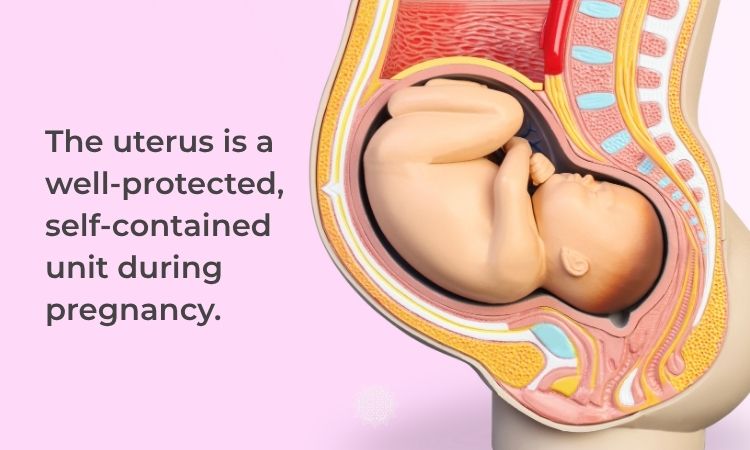
Penetration will not harm the baby. The uterus is a well-protected, self-contained unit during pregnancy, and the body has several layers of protection to keep a fetus safe, including during intercourse.
You may feel the uterus moving around a bit, but there is no reason for concern. You may also notice some spotting after sex, which is typical in cases where the cervix has become more sensitive. If it persists, call your provider. If it’s light spotting that resolves within a day or two, there is nothing to worry about.
One precaution worth noting: if you are engaging in intercourse with new or multiple partners, or if you are in a non-monogamous partnership, protect against sexually transmitted infections. These can cause serious birth complications, and that is where caution genuinely applies.
It’s also completely normal if your libido lowers or disappears during part or all of your pregnancy. Every woman is different. Don’t be concerned if you prefer to wait until around six weeks after birth before reengaging with your partner.
For a deeper dive into sex during pregnancy , Healthline has a thorough and informative article worth reading.
Myth 4: Exercise during pregnancy should be avoided
This pregnancy myth makes me laugh. I’ll be honest. I can’t help but wonder if there’s any way this idea came from a woman, because it feels like a theory an authoritative male expert would come up with to sound smart.
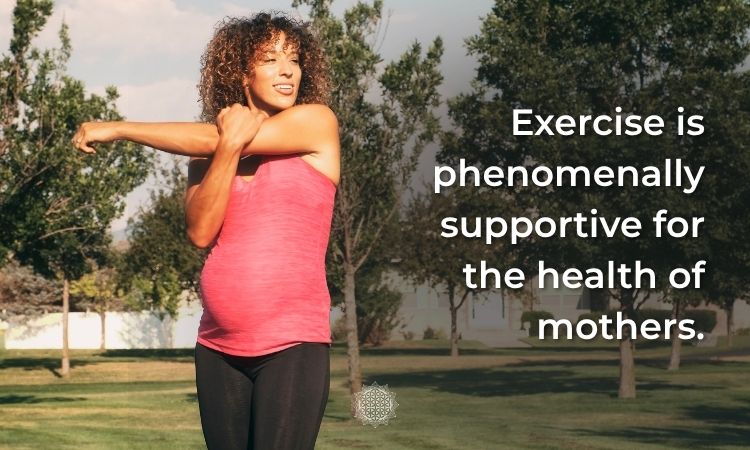
Why would exercise be harmful to a normal, developing baby? Exercise is phenomenally supportive for the health of mothers, and it only serves a baby’s health in return.
It is important to avoid high-impact activities during pregnancy and anything that creates a risk of falling or serious physical injury. No horseback riding or skiing. But 20 to 30 minutes of moderate exercise during pregnancy daily is a wonderful routine to maintain.
Yoga, light rebounding in the first and second trimesters, walking, biking in safe open spaces, rowing, swimming, and dancing are all beautiful ways to move your body during pregnancy.
I know women who worked full-time jobs on their feet for 40 hours a week until days before giving birth to phenomenally healthy babies. Don’t let this pregnancy myth hold you back from moving in ways that feel good.
If you are navigating a chronic illness alongside pregnancy, visit the free resources for women navigating chronic illness and pregnancy that can support you.
Myth 5: Routine tests are necessary for a healthy pregnancy
I’ve covered this topic in depth when debunking birth myths that surround labor and delivery. Pregnancy and birth are natural processes the female body is designed to carry out without medical intervention.
While we are fortunate to have modern medicine available to us, we have been encouraged to see regular medical checkups and testing as the only reliable way to gauge the health of a pregnancy. That is not accurate.
During my years as a birthing practitioner, I observed how often women were encouraged to undergo procedures that were not only unnecessary but also potentially harmful. Doctors seemed to downplay the risks while discussing the benefits of “getting ahead of any potential congenital issues.”
Pregnancy testing risks are real and often minimized. There are radiation exposures to consider with standard procedures like ultrasounds. Tests like amniocentesis carry serious health risks to a growing fetus in the womb. For more on documented amniocentesis risks, Mayo Clinic provides a clear overview.
These diagnostics should not be treated lightly just because they are common. We must remember that hospitals charge for tests, procedures, and additional care.
Be certain that whatever testing you undergo feels genuinely valuable and necessary, not reflexive.
I always recommend that women work with an experienced midwife who can provide insight into the need for medical testing throughout pregnancy. In many cases, midwives offer a complementary perspective to what traditional doctors recommend, so that parents can make a balanced, informed decision.
If you want personal support navigating pregnancy, chronic illness, or both, explore private appointments for fertility, conception, pregnancy and birth to work with me directly.
What happens when we stop questioning
While many articles exposing pregnancy myths are informative, what I’d love to see more of is women who are fed up with being given false, misleading, or incomplete information about their bodies and their health.
I’m ready for women to get mad about the confusion that surrounds health. Too many of us have followed guidance we believed was well-intentioned, only to find that it either wasted our time and energy or ultimately harmed our health.
Too many women are being gaslit into believing that their bodies are faulty, incurable, or letting them down somehow. The experts perpetuating these trends take our voices away, disempowering us in the name of science and medical authority.
The experts don’t have all the answers. Just look at how often science is still wrong about health and how common these pregnancy myths, and other health myths, remain in mainstream thinking.
As a woman determined to support other women, I encourage you to look to your greatest teachers: God, your intuition, your body, and the women you trust. As you tap into the wisdom innate in your being, you will become more attuned to what is true and better able to navigate around myths and misconceptions. I’m honored to help you find your voice.
To your health and peace,
Muneeza
 A 3-Month Program to Support Women Through Fertility to Conception, Pregnancy, Birth & Beyond
Get the support you deserve to have a positive, empowering & healthy conception & birth.
- Weekly Content-Rich Video Training & LIVE Q&A Calls
- Community Connection Circle
- Blossom Community Garden
- Workbooks